With Small-Mine Development Underway, American Antimony Advances Historic Roadwork to Reconnect Past-Producing Mines at Bernice Canyon Strike

Austin, Texas--(October 19, 2026) - American Antimony Corporation (OTCID: XTPT), operating as Xtra Energy Corp. ("American Antimony" or the "Company"), today announced the advancement of a district-wide road restoration and rehabilitation initiative at its flagship American Antimony Project in Bernice Canyon, Nevada. The initiative is intended to reestablish access to additional historic producing mines, prospects and mineralized areas beyond the Company's core Arrance and Antimony King exploration areas, supporting expanded exploration, geological evaluation and the potential identification of additional antimony, gold and silver mineralization across approximately 3.5 miles of historic strike.
Improved Road connectivity would also allow technical teams to revisit past-producing mines and historic workings, evaluate large stockpiles and underexplored targets, extend mapping and sampling programs along with potential future resource expansion beyond the world-class potential already identified Antimony deposits at Arrance and Antimony King.
Rather than establishing an entirely new network, the Company proposes to repair and rehabilitate existing historic mining roads and access corridors. Improved connectivity would allow technical teams to revisit past-producing mines and historic workings, evaluate stockpiles and underexplored targets, extend mapping and sampling programs, and assess opportunities for additional antimony mineralization, historically reported gold and silver occurrences, and potential future resource expansion beyond the world-class potential already identified at Arrance.
Decades of erosion, weathering, washouts and limited maintenance have left portions of the district's historic road network difficult or unsafe to traverse. Restoring these previously established routes is intended to improve project logistics and field safety while minimizing unnecessary new surface disturbance, subject to applicable approvals.
Project-Wide Access Through Existing Infrastructure
The purpose of restoring the historic road network is broader than improved transportation: practical access is a prerequisite for systematically evaluating additional past-producing mines and exploration targets throughout Bernice Canyon. The district-scale map below shows how the completed core-area access and proposed rehabilitation routes relate to historic mine areas beyond Arrance and Antimony King.
Figure 1. Bernice Canyon District - Historic Mine Areas and District-Wide Access Network
District-scale perspective illustrating the Company's completed Phase I road restoration and proposed Phase II restoration of pre-existing historic mining roads. The map highlights the relationship between the restored and proposed access routes and historic mine areas across Bernice Canyon, including Antimony King, King Solomon, Arrance, Hoyt, U-Bet, Marguerite Group, Drumm and Blue Eagle.
To view an enhanced version of this graphic, please visit:
https://images.newsfilecorp.com/files/12254/319678_45bb1e1e14325865_001full.jpg
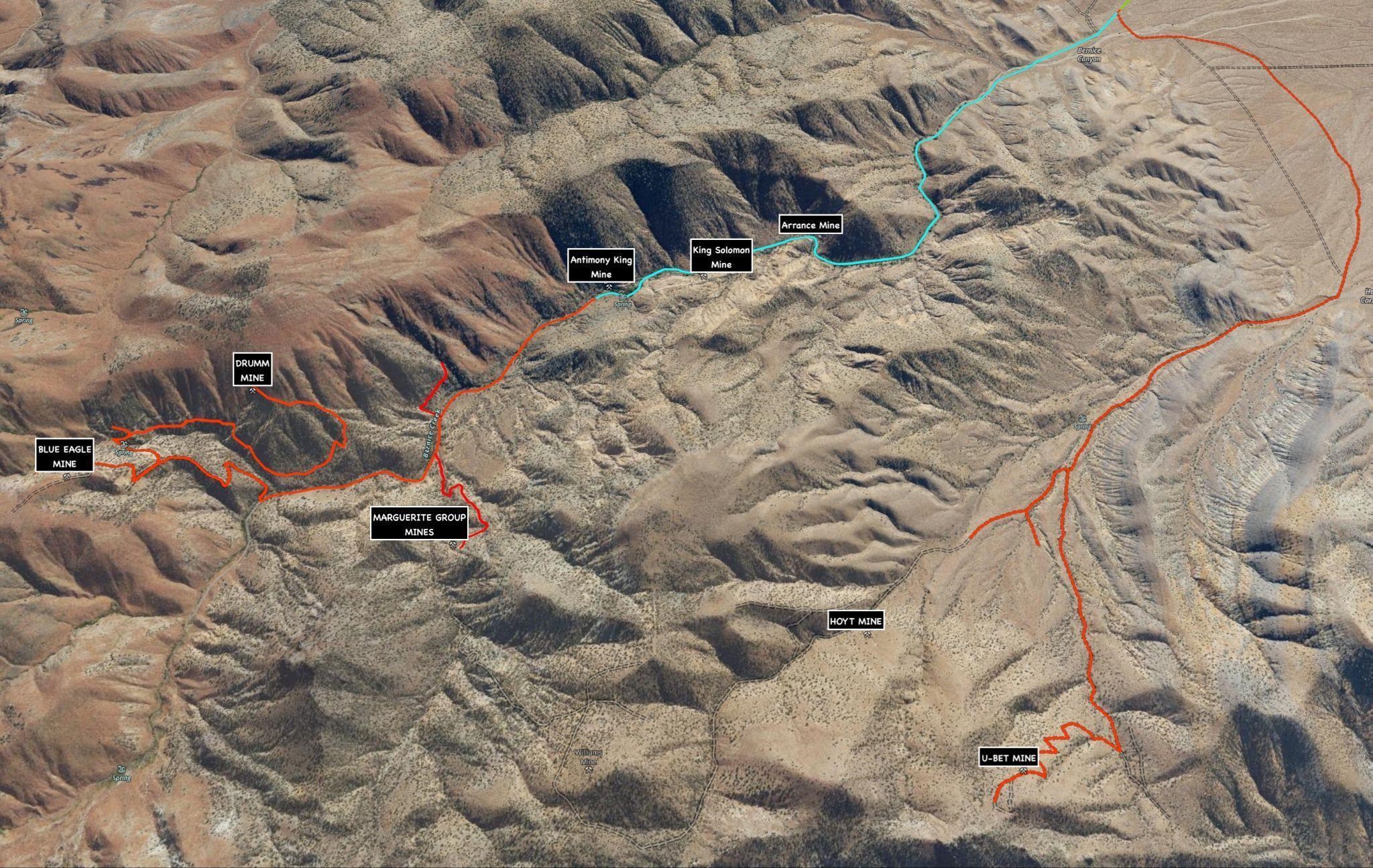
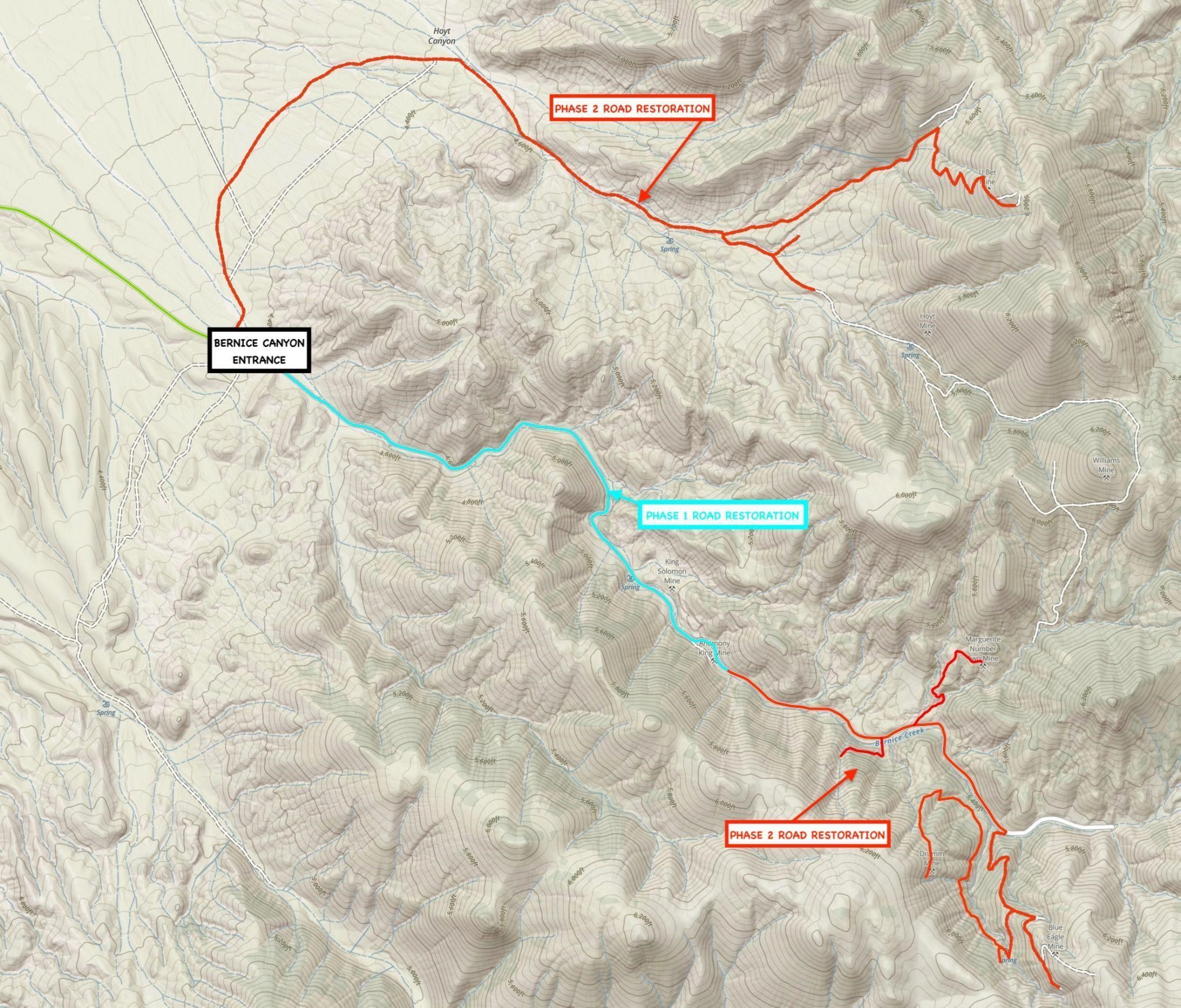
As illustrated above, Phase I (in blue) restoration established reliable access through the Company's core Antimony King, King Solomon and Arrance exploration areas. The proposed Phase II (in red) restoration would extend that strategy across the broader historic road network, reestablishing access toward Hoyt and U-Bet to the northeast and the Marguerite Group, Drumm and Blue Eagle areas to the south.
Importantly, the proposed Phase II routes utilize pre-existing roads and access corridors established through historical mining activity, allowing the Company to pursue district-wide connectivity through restoration of existing infrastructure rather than development of an entirely new road network.
Recent field evaluations by Western Frontier examined these historical access routes and identified areas where repair and rehabilitation could restore practical access to additional mines, prospects and exploration targets, with particular attention given to routes toward the Blue Eagle area and along the historic Hoyt Road corridor.
Management believes that restoring these connections could enable systematic examination of additional historic producers and underexplored mineralized areas across approximately 3.5 miles of strike. This work may help identify extensions, parallel targets and other opportunities for future resource-definition programs, building upon the drilling results at Arrance.
Reestablishing Access Across 3.5 Miles of Historic Mining and Mineralization
Bernice Canyon is not defined by a single historical mine. Numerous historic antimony mines, prospects, workings and mineralized areas occur throughout the broader property position. Reestablishing access would enable field teams to evaluate these locations directly and determine which merit follow-up sampling, mapping, drilling or other technical work.
The proposed restoration program is designed to reconnect approximately 3.5 miles of this historically mineralized corridor, extending from the Company's established Antimony King and Arrance exploration areas toward historic mine and prospect areas associated with Hoyt, Marguerite, Drumm, Blue Eagle and U-Bet.
Figure 2. Historic Bernice Canyon Mining-Road Network - Phase I vs. Proposed Phase II Historic Road Restoration
Proposed district-wide access plan utilizing pre-existing historic mining roads and access corridors. Planned rehabilitation is designed to reestablish practical connectivity between historic mines, prospects and exploration areas across approximately 3.5 miles of historically mineralized strike.
To view an enhanced version of this graphic, please visit:
https://images.newsfilecorp.com/files/12254/319678_45bb1e1e14325865_002full.jpg
Restoring these existing corridors is expected to improve operational flexibility and support Phase II and future drilling, geological mapping and sampling, historic mine and stockpile evaluation, equipment mobilization, environmental programs, potential resource-definition work and future mine planning, subject to applicable permitting and regulatory approvals.
Building Upon Successfully Completed Phase I Roadwork
American Antimony's initial infrastructure program established the practical access necessary to execute its Phase I drilling campaign.
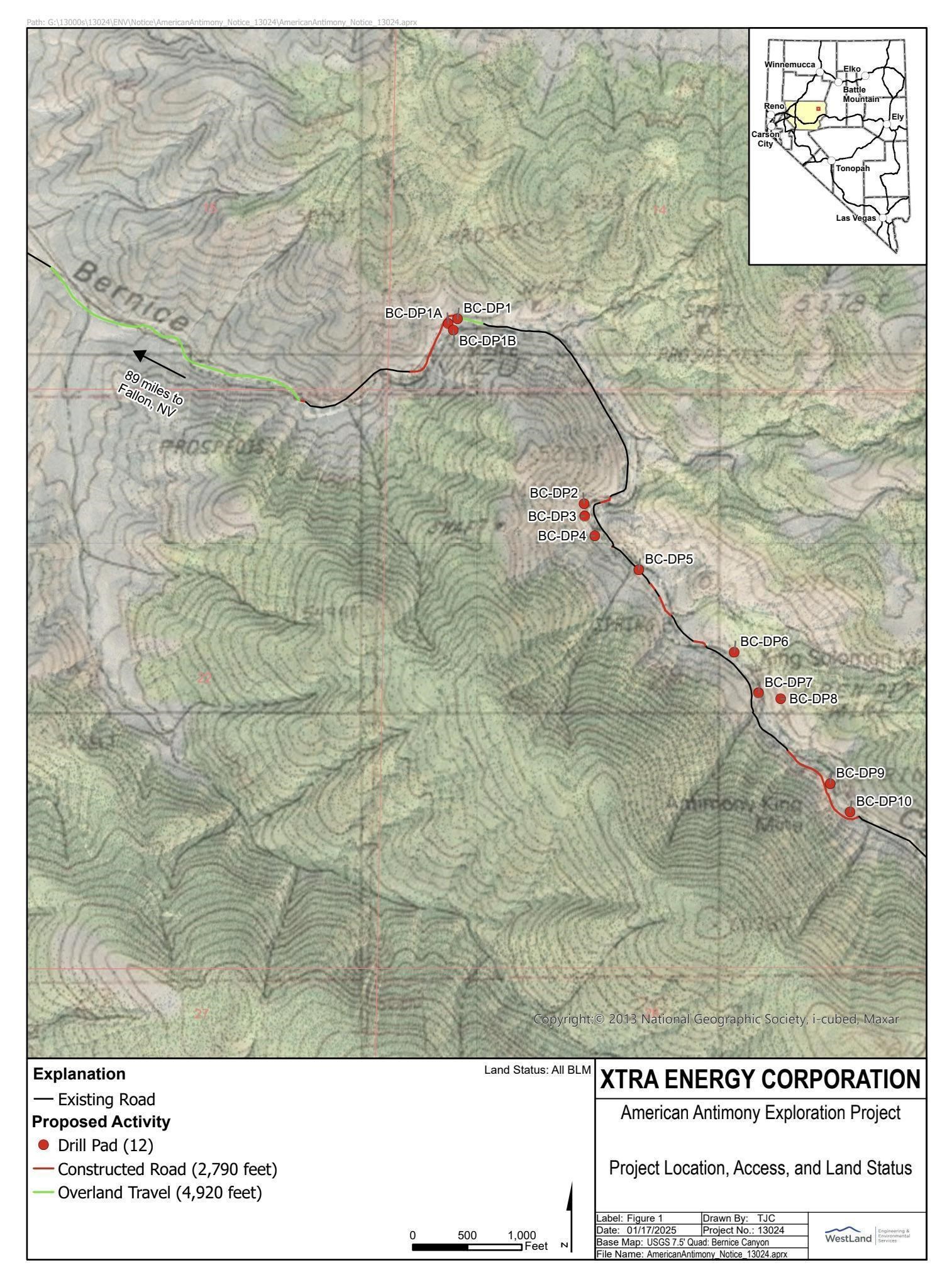
In June 2025, the Company announced final approval from the U.S. Bureau of Land Management ("BLM") for road construction and drilling activities at the American Antimony Project. The approved program included approximately 2,790 feet of constructed road, 4,920 feet of overland travel and 12 drill pads.
The completed infrastructure supported Phase I drilling, geological investigation, sampling and subsequent technical programs within the Company's core exploration area.
Figure 3. Phase I Access Infrastructure - Previously Permitted and Completed Roadwork
Previously permitted and completed Phase I access infrastructure at the American Antimony Project, including approximately 2,790 feet of constructed road, 4,920 feet of overland travel and 12 drill pads.
To view an enhanced version of this graphic, please visit:
https://images.newsfilecorp.com/files/12254/319678_45bb1e1e14325865_003full.jpg
With core-area access established through the previously approved Phase I program, the Company is now seeking to restore the wider historic road network that once connected additional mining operations throughout Bernice Canyon.
Improving Safety and Accessibility
The benefits of restoring Bernice Canyon's historical road network extend beyond American Antimony's exploration activities.
Repairing deteriorated roadbeds, washouts and unsafe sections can improve travel conditions along existing routes. Where available for lawful public or third-party use, restored roads could also improve accessibility for land-management personnel, emergency responders, recreational users and other authorized users of the area.
The Company believes rehabilitation of previously established access corridors represents a practical approach to improving project logistics and public safety while responsibly utilizing infrastructure already present within the district.
CEO Commentary
"Alongside our ongoing focus on establishing initial small-mine operations at Arrance and Antimony King, we have initiated efforts to restore the historic Bernice and Hoyt mining-road networks. This work is intended to provide access to additional historic mines across our property and allow us to begin systematically exploring areas such as Hoyt, Marguerite, Drumm, Blue Eagle, U-Bet and other historic workings throughout the district.
Historical records indicate the potential for significant silver and gold mineralization in addition to antimony across portions of these areas. Our objective is to build upon the work already underway at Arrance and Antimony King while opening up the broader district for further exploration and potential resource expansion.
At the same time, repairing these deteriorated routes can improve safety and accessibility for others who lawfully use the area."
- Mac J. Shahsavar, P.Eng., Chairman and Chief Executive Officer
Restoring a District, Not just a Mine - Reestablishing Access to a Historic Antimony District
Bernice Canyon supported antimony mining and production activities long before American Antimony's modern exploration program.
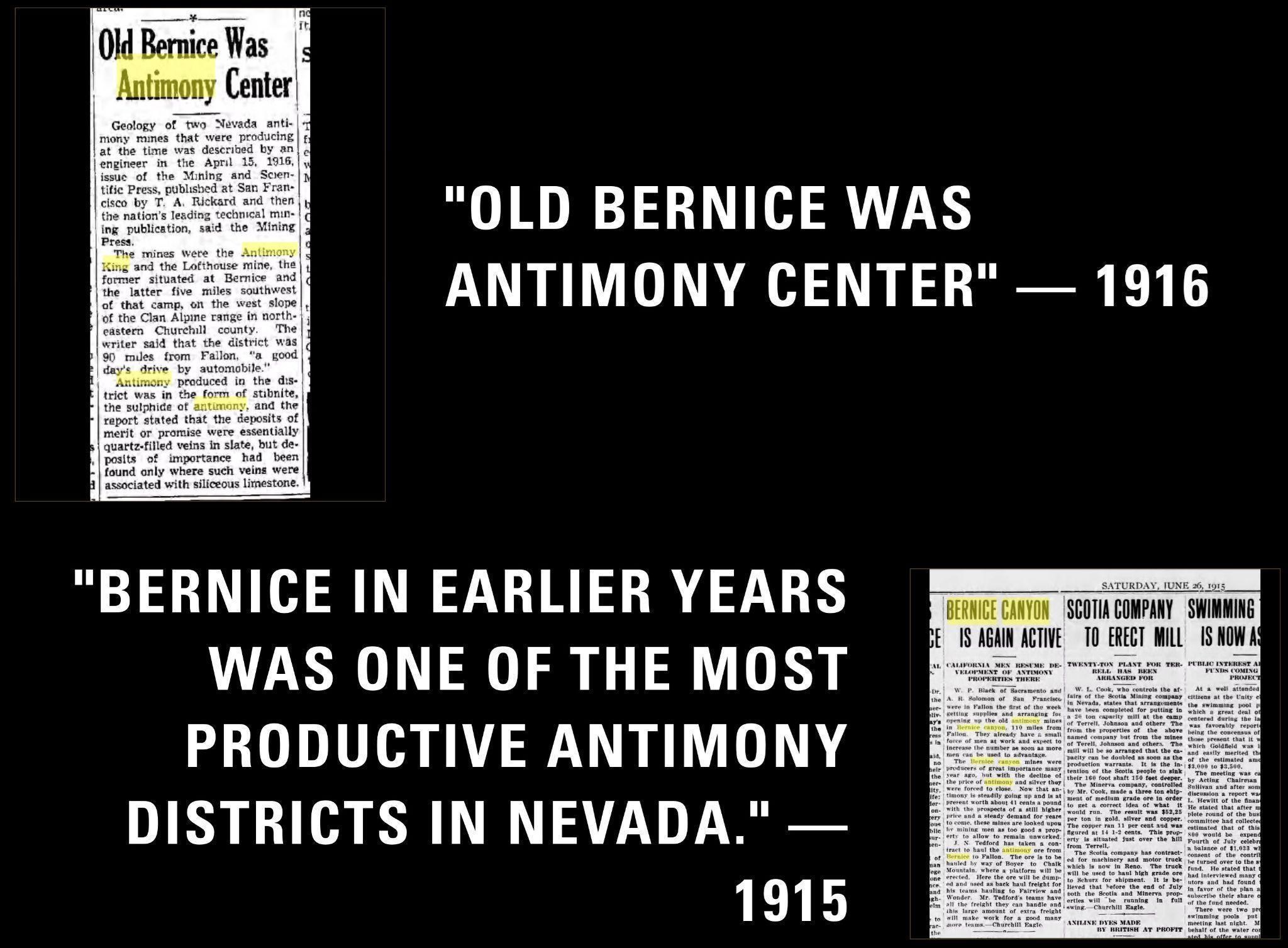
Historical accounts dating to the early 20th century document Bernice Canyon as an established antimony-producing district. Generations of exploration and mining resulted in numerous mines, prospects, workings, stockpiles and the access roads necessary to connect them.
Figure 4. Bernice Canyon - A Historic Nevada Antimony Mining District
Historical newspaper accounts from 1915 and 1916 documenting Bernice Canyon's significance as an active antimony-producing district.
To view an enhanced version of this graphic, please visit:
https://images.newsfilecorp.com/files/12254/319678_45bb1e1e14325865_004full.jpg
Many of these historical roads remain identifiable today but have deteriorated after decades of limited maintenance.
The Company's proposed work is focused on repairing and rehabilitating these pre-existing historical road alignments. Where permitted and appropriate, activities may include repairing eroded or washed-out sections, restoring deteriorated roadbeds, removing obstructions, improving drainage and stabilizing unsafe sections.
The objective is to responsibly restore infrastructure that historically served the Bernice Canyon mining district while minimizing the need for unnecessary new surface disturbance.
About American Antimony Corporation
American Antimony Corporation (OTCID: XTPT), operating as Xtra Energy Corp., is focused on advancing high-grade antimony assets in the United States to support secure domestic supply of this critical mineral.
The Company's flagship American Antimony Project comprises approximately 201 claims totaling 4,153 acres in Nevada's Bernice Canyon district and includes the historically productive Antimony King Mine.
The Company also holds the 1,240-acre Stibium Creek Project in Lander County, Nevada, expanding its antimony-focused Nevada portfolio.
American Antimony is pursuing a staged development strategy encompassing exploration, permitting, metallurgy, infrastructure and early-stage mine development, with the objective of producing high-grade antimony concentrates to support domestic and global supply needs.
Follow Us:
LinkedIn: American Antimony X (Twitter): @AmericanSbCorp Instagram: @AmericanAntimony Facebook: American Antimony
Forward-Looking Statements
This press release contains forward-looking statements within the meaning of Section 27A of the Securities Act of 1933, as amended, and Section 21E of the Securities Exchange Act of 1934, as amended. Forward-looking statements reflect current expectations and assumptions and are subject to known and unknown risks, uncertainties and other factors that may cause actual results to differ materially from those expressed or implied.
Forward-looking statements in this release include statements regarding proposed road rehabilitation, permitting and regulatory approvals, future exploration and drilling, improved access, resource-definition activities, infrastructure development, mine planning and potential staged development.
Readers are cautioned not to place undue reliance on forward-looking statements, which speak only as of the date of this release. The Company undertakes no obligation to publicly update or revise forward-looking statements except as required by applicable law. Additional information regarding the Company and associated risks is available through its disclosures filed with OTC Markets : https://www.otcmarkets.com/stock/XTPT/disclosure
Source: American Antimony Corporation dba Xtra Energy Corporation